Nepali Calendar vs Gregorian Calendar: Key Differences Explained
In our interconnected world, understanding different calendar systems has become essential for communication, business, and cultural appreciation. The Nepali Calendar vs Gregorian Calendar: Key Differences represents one of the most fascinating contrasts between traditional Eastern timekeeping and the internationally adopted Western system. Whether you’re a Nepali living abroad, a student researching calendar systems, or someone working with Nepal, understanding these differences can significantly impact your daily interactions and planning.
Calendars shape how we organize our lives, celebrate festivals, conduct business, and maintain official records. In Nepal, the coexistence of the Bikram Sambat vs Gregorian calendar creates unique challenges and opportunities that millions of people navigate daily. This comprehensive guide will explore every aspect of these two distinct calendar systems and help you understand when and why each is used.
What is the Nepali Calendar (Bikram Sambat)?
The Nepali calendar, officially known as Bikram Sambat (BS), represents one of the world’s oldest and most culturally significant calendar systems. Named after the legendary King Vikramaditya, this history of Bikram Sambat stretches back over two millennia, making it a cornerstone of South Asian cultural heritage.
Origins and Historical Significance
Bikram Sambat originated in 57 BCE when King Vikramaditya of Ujjain established this calendar system after his victory over the Saka rulers. The calendar gained widespread acceptance across the Indian subcontinent and continues to serve as Nepal’s official calendar system today.
Structure and Characteristics
The Nepali calendar operates as a lunisolar calendar, combining both lunar phases and solar cycles to create a sophisticated timekeeping system. This hybrid approach allows the calendar to maintain astronomical accuracy while preserving cultural and religious significance.Key features of Bikram Sambat include:Variable Month Lengths: Unlike the Gregorian system’s fixed structure, Nepali months contain varying numbers of days, ranging from 29 to 32 days depending on astronomical calculations. Cultural Integration: The calendar seamlessly incorporates Nepali festivals and religious observances, making it indispensable for spiritual and cultural life. Astronomical Precision: Regular adjustments ensure alignment with actual solar and lunar cycles, maintaining accuracy over long periods.
What is the Gregorian Calendar?
The Gregorian calendar system represents the world’s most widely adopted timekeeping method, introduced by Pope Gregory XIII in 1582 CE. This solar calendar system reformed the earlier Julian calendar by introducing more precise leap year calculations and better astronomical alignment.
Global Adoption and Standardization
The Gregorian calendar achieved worldwide acceptance due to its mathematical precision and practical simplicity. Most international business, diplomatic relations, and global communications rely on this standardized system, making it essential for modern interconnected activities.
Structure and Design
The Gregorian calendar follows a purely solar approach, organizing the year into twelve months with predetermined lengths. This consistency makes it particularly suitable for:International Business: Standardized dates facilitate global commerce and communication. Scientific Research: Precise, uniform dating supports accurate record-keeping and data analysis. Digital Systems: Computer systems and software applications easily process fixed calendar structures. Travel and Tourism: Universal adoption simplifies international travel planning and coordination.
Key Differences Between Nepali and Gregorian Calendars
Understanding the Nepali Calendar vs Gregorian Calendar: Key Differences requires examining multiple aspects of these distinct systems. Each difference reflects deeper cultural, astronomical, and practical considerations that have evolved over centuries.
Starting Year Difference
The most immediately noticeable difference lies in the year count. Bikram Sambat is approximately 57 years ahead of the Gregorian calendar. However, this difference varies slightly depending on the time of year:January to April: BS is 56 years ahead of AD May to December: BS is 57 years ahead of AD
For example, when it’s 2025 in the Gregorian calendar, it’s 2081-2082 in Nepali calendar 2082.
Calendar Structure and Month Organization
Nepali Calendar Structure:
- Follows a lunisolar system combining lunar and solar elements
- Contains 12 months with varying lengths (29-32 days)
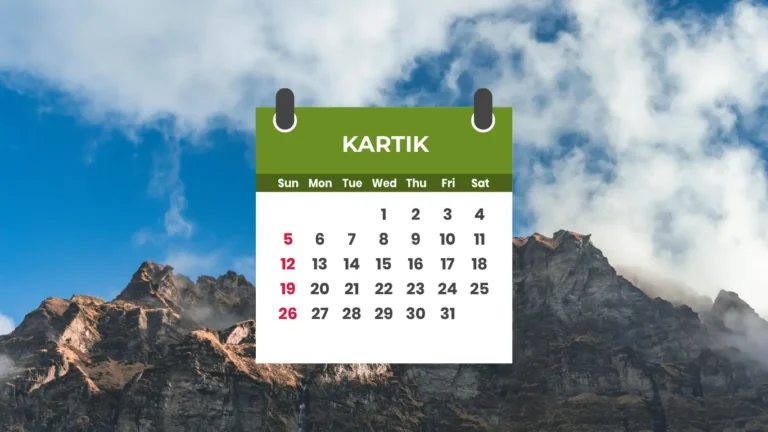
- Month names: Baishakh, Jestha, Ashadh, Shrawan, Bhadra, Ashwin, Kartik, Mangsir, Poush, Magh, Falgun, Chaitra
- Years begin in mid-April (Baishakh 1)
Gregorian Calendar Structure:
- Purely solar system with fixed month lengths
- Contains 12 months (28-31 days)
- Month names: January through December
- Years begin on January 1
Festival and Cultural Integration
The cultural importance of calendars in Nepal becomes evident in festival scheduling and religious observances. Nepali festivals align perfectly with the Bikram Sambat calendar, ensuring astronomical and spiritual accuracy:Major Festivals in BS Calendar:
- Dashain (Ashwin month)
- Tihar (Kartik month)
- Holi (Falgun month)
- New Year (Baishakh 1)
These celebrations often fall on different Gregorian dates each year due to the lunisolar calculations involved in BS dating.
Official and Governmental Usage
Nepal’s constitution explicitly establishes Bikram Sambat as the official calendar system. Government documents, legal papers, and official communications primarily use BS dates, though AD dates often appear parenthetically for international reference.Areas where BS is mandatory:
- Birth certificates and citizenship documents
- Government employment records
- Educational transcripts and certificates
- Court proceedings and legal documents
- Tax filings and financial records
When to Use BS vs AD in Real Life
Understanding practical applications of each calendar system helps navigate daily life in Nepal and international contexts.
Domestic Applications (BS Preferred)
Educational System: Schools and universities in Nepal operate on the BS calendar for academic years, examinations, and administrative purposes. Government Services: All official transactions, from voter registration to passport applications, require BS dates for accuracy and legal validity. Religious and Cultural Events: Temple ceremonies, family celebrations, and traditional festivals follow BS dating exclusively. Local Business: Domestic companies often use BS for internal operations, employee records, and local customer communications.
International Applications (AD Required)
Travel Documentation: International passports, visas, and travel insurance require Gregorian dates for global compatibility. Online Services: Most digital platforms, international websites, and global software systems operate exclusively on AD dating. International Business: Export-import documentation, international contracts, and global financial transactions mandate Gregorian dates. Medical Records: International medical treatments, insurance claims, and health records typically require AD dating for consistency.
Role of Date Converter Tools
The complexity of BS to AD conversion and AD to BS conversion has created a vital need for accurate translation tools. Digital date converters bridge the gap between these two systems, enabling seamless transitions for various applications.
Technical Challenges in Conversion
Converting between Bikram Sambat and Gregorian calendars involves complex astronomical calculations. Unlike simple arithmetic operations, accurate conversion requires:Lunar Phase Calculations: Accounting for the lunisolar nature of BS dating Leap Year Adjustments: Coordinating different leap year systems Regional Variations: Considering local astronomical observations Historical Accuracy: Maintaining precision across different time periods
Practical Benefits of Date Converters
Modern date conversion tools provide essential services for:Document Preparation: Ensuring accuracy when filling forms requiring different calendar systems Event Planning: Coordinating celebrations and meetings across calendar systems Historical Research: Converting historical dates for academic and genealogical research Business Operations: Facilitating smooth operations for companies working with both systems
Practical Examples: Festival Dates in Both Calendars
To illustrate the practical implications of these calendar differences, consider how major Nepali celebrations align with both systems:
Dashain 2024-2025 Example
Bikram Sambat Dating: Ashwin 6-21, 2081 BS Gregorian Calendar Dating: September 22 – October 7, 2024 AD
This fifteen-day festival demonstrates how BS dating maintains consistent cultural timing while AD dates shift annually.
Nepali New Year Comparison
BS New Year: Always falls on Baishakh 1 Gregorian Equivalent: Typically April 13-15 (varies yearly)
The consistency of BS dating for cultural events contrasts sharply with the variable AD equivalents.
Accuracy and Astronomical Considerations
Both calendar systems strive for astronomical accuracy, but their approaches differ significantly:
Bikram Sambat Precision
The lunisolar nature of BS allows for:
- Precise alignment with seasonal changes
- Accurate prediction of lunar phases
- Cultural synchronization with agricultural cycles
- Religious observance timing based on astronomical events
Gregorian Calendar Precision
The solar focus of the Gregorian system provides:
- Consistent seasonal alignment
- Simplified leap year calculations
- International standardization
- Compatibility with scientific measurements
Future of Calendar Systems in Nepal
As Nepal continues modernizing while preserving cultural heritage, the relationship between these calendar systems continues evolving. Digital integration, international connectivity, and cultural preservation create ongoing challenges and opportunities.
Technological Integration
Modern solutions increasingly accommodate both systems through:
- Dual-date digital displays
- Automatic conversion capabilities
- Cultural-aware software applications
- International compatibility with local relevance
Educational and Cultural Preservation
Ensuring future generations understand both systems requires:
- Comprehensive education about calendar differences
- Cultural programs highlighting BS significance
- Technology that preserves traditional knowledge
- International awareness of Nepali calendar systems
Frequently Asked Questions
Which calendar is officially used in Nepal?
Bikram Sambat (BS) is the official calendar system in Nepal. Government documents, legal proceedings, and official communications primarily use BS dates, though AD dates often appear for international reference.
Why is Bikram Sambat 56-57 years ahead of the Gregorian calendar?
The difference stems from Bikram Sambat’s establishment in 57 BCE, while the Gregorian calendar begins from 1 CE. The exact difference varies by season due to the lunisolar nature of BS compared to the purely solar Gregorian system.
Which calendar system is more accurate astronomically?
Both systems achieve astronomical accuracy through different approaches. Bikram Sambat provides superior lunar phase accuracy due to its lunisolar design, while the Gregorian calendar offers consistent solar year alignment. The choice depends on the specific astronomical phenomena being tracked.
How do I convert BS dates to AD and vice versa?
Accurate conversion requires specialized date converter tools that account for the complex astronomical calculations involved. Simple arithmetic doesn’t work due to the lunisolar nature of BS and varying month lengths in both systems.
Do I need to know both calendar systems in Nepal?
Yes, understanding both systems is essential for daily life in Nepal. BS knowledge helps with government services, cultural events, and local business, while AD knowledge supports international travel, online services, and global communications.
What tools can help me work with both calendar systems?
Digital date converters, Nepali Age Calculator tools, and comprehensive Nepali Calendar 2082 applications provide essential support for managing both systems effectively. These tools ensure accuracy and reduce conversion errors.
Conclusion
The Nepali Calendar vs Gregorian Calendar: Key Differences reflect the rich complexity of cultural preservation in our modern, interconnected world. Understanding both the Bikram Sambat vs Gregorian calendar systems empowers you to navigate Nepal’s unique temporal landscape with confidence and cultural sensitivity.
While the Gregorian calendar system dominates international affairs, the cultural importance of calendars in Nepal ensures that Bikram Sambat remains vital for authentic cultural participation and official documentation. The approximately 57-year difference between these systems, combined with their distinct structural approaches, creates both challenges and opportunities for accurate timekeeping.
Whether you’re planning Nepali festivals, conducting business in Nepal, or simply seeking to understand this fascinating cultural intersection, mastering both calendar systems opens doors to deeper cultural appreciation and practical efficiency. The history of Bikram Sambat teaches us that traditional knowledge systems can coexist beautifully with modern requirements when proper tools and understanding support their integration.
For seamless navigation between these calendar systems, consider using reliable date conversion tools like Miti Converter. With accurate BS to AD conversion and AD to BS conversion capabilities, along with comprehensive Nepali calendar 2082 features, these tools ensure you never miss important dates or cultural celebrations while maintaining international compatibility.
Embrace the richness of Nepal’s dual calendar system, and discover how understanding these differences enhances both your cultural knowledge and practical planning capabilities. The Nepali Calendar vs Gregorian Calendar: Key Differences represent not just temporal variations, but windows into the beautiful complexity of human cultural expression.